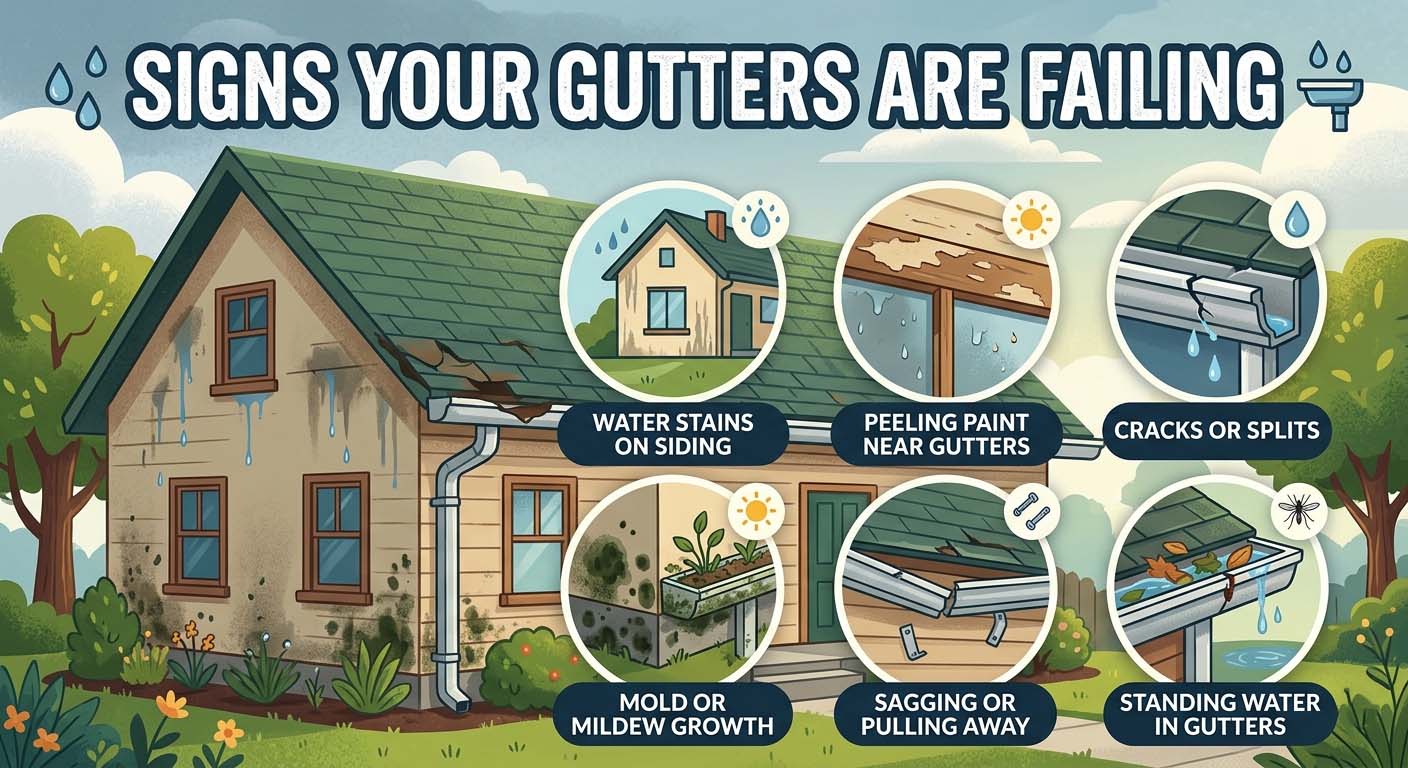
If you notice any sagging or drooping of the gutter system that is a big indication that there are deeper issues like wooden fasica board rot. Any water dripping from the eavestrough anywhere is an issue. When the gutter system on your home is functioning perfectly you will only see water coming out of the end of the downspout, water coming out anywhere else means your gutter system is malfuctioning.
If your gutters are sagging, leaking, overflowing, pulling away from the house, or showing visible rust and damage, there's a good chance they're already failing. The problem is that most homeowners don't notice the warning signs until water starts getting into places it shouldn't. By that point, what could have been a simple repair often turns into damaged soffit, rotted fascia, foundation issues, or landscaping repairs.
After years of working on homes throughout Edmonton and the surrounding area, I've noticed the same pattern over and over again. Homeowners usually call us after they see water pouring over the edge during a storm or discover water damage around their home. In reality, the gutters were giving them warnings months or even years earlier.
Knowing what to look for can save you a lot of money.
Water Overflowing During Rainfall
One of the first signs of failing gutters is water overflowing during rainfall. Many homeowners assume this simply means the gutters need cleaning, and sometimes that's true. However, overflow can also indicate improper slope, damaged sections, undersized gutters, or downspouts that aren't draining properly.
We recently worked on a home in Sherwood Park where the homeowner thought leaves were causing the problem. After inspection, we found multiple sections of eavestrough that had gradually pulled away from the fascia board over the years. Water wasn't reaching the downspouts properly and was spilling over the front edge during every major rainstorm. The homeowner had already spent money replacing landscaping that had been washed out twice before discovering the real issue.
Sagging Gutters
A properly installed gutter system should maintain a consistent line along the roof edge. If you can see sections dipping, bowing, or pulling away from the house, something is wrong. Alberta winters are particularly hard on gutter systems. Heavy snow accumulation, ice buildup, and freeze-thaw cycles place tremendous stress on fasteners and brackets.
In Edmonton, it's common to see gutters damaged after winters with significant snowfall. The weight of ice alone can be enough to distort sections of eavestrough that are already weakened. Once a gutter begins sagging, water starts pooling instead of flowing toward the downspouts. Standing water creates even more weight, accelerating the failure.
Peeling Paint and Water Stains
Another sign many homeowners overlook is peeling paint or staining around the gutters.
Water follows gravity. When gutters leak or overflow repeatedly, moisture often finds its way behind the system and onto fascia boards, soffits, siding, and trim. If you're noticing paint bubbling, discoloration, black streaks, or soft wood around your gutters, there's usually an underlying drainage issue causing it.
We see this frequently in older neighbourhoods throughout St. Albert where original gutter systems are reaching the end of their lifespan. Homeowners often focus on repainting the damaged area without addressing the source of the moisture. A year later, the problem returns.
Rust and Corrosion
Rust and corrosion should never be ignored.
Small rust spots might seem cosmetic, but they usually indicate that the protective finish has been compromised. Once corrosion starts, it spreads. Tiny holes become larger leaks. Before long, water begins escaping long before it reaches the downspouts.
On a recent project in Fort Saskatchewan, we found multiple rusted sections hidden beneath accumulated debris. The homeowner couldn't understand why water was pooling near the foundation despite having clean gutters. The answer became obvious once we inspected the system closely. Water was leaking from several corroded seams along the back side of the eavestrough where it wasn't immediately visible from the ground.
Loose Fasteners and Pulling Gutters
Loose fasteners are another common warning sign.
If spikes, screws, brackets, or hangers are backing out, your gutter system is losing structural support. This often happens gradually. Homeowners may not notice anything until an entire section begins separating from the home.
In areas like Spruce Grove and Beaumont, where strong winds can accompany summer storms, loose gutters often deteriorate much faster. Every storm adds a little more movement until the damage becomes significant.
Problems Around Your Foundation
You should also pay attention to what happens around your foundation.
Many gutter failures reveal themselves at ground level rather than roof level. If you're seeing soil erosion, mulch displacement, standing water, or unusually wet areas near your home's foundation, your gutters may not be directing water where it needs to go.
One homeowner in Leduc called us because water was collecting near a basement window after every rainfall. They assumed the issue was with the grading around the house. During our inspection, we discovered a disconnected downspout hidden behind shrubs. Instead of carrying water away from the foundation, it had been dumping thousands of litres of runoff directly beside the home for months.
The fix was relatively simple, but had it gone unnoticed much longer, the repair bill could have been substantially larger.
Leaking Seams and Joints
Separation at seams and joints is another sign that a gutter system is nearing failure.
Most gutter leaks start at seams. As materials expand and contract through Alberta's changing temperatures, joints experience constant movement. Over time, sealants dry out, connections loosen, and leaks develop.
This is especially common on older systems throughout Edmonton where decades of seasonal temperature swings have taken their toll. What starts as a small drip can eventually create major moisture issues behind the gutter system.
A Local Edmonton Case Study
One local case stands out because it highlights how quickly a small problem can become expensive.
A homeowner in north Edmonton contacted us after noticing minor staining on their soffit. From the ground, everything looked fairly normal. Once we got up to inspect the system, we found several failing seams, sections pulling away from the fascia, and multiple areas where water had been running behind the gutter for years.
The moisture had already caused rot in portions of the fascia board that weren't visible from below. Fortunately, we caught it before structural repairs became necessary. The homeowner ended up replacing damaged sections of fascia and upgrading the gutter system. Had they waited another year or two, the repair costs would have been significantly higher.
Don't Ignore the Warning Signs
One of the biggest mistakes homeowners make is assuming gutters either work or they don't. In reality, gutter systems usually fail gradually. They provide warning signs long before major damage occurs.
If you notice overflowing water, sagging sections, rust, staining, loose fasteners, pooling near your foundation, or visible separation from the house, it's worth having the system inspected. Small repairs completed early are almost always less expensive than dealing with water damage later.
At Catch It All, we inspect and repair gutter systems throughout Edmonton, Sherwood Park, St. Albert, Spruce Grove, Leduc, Beaumont, and Fort Saskatchewan. If you're seeing any of these warning signs, don't wait until the next heavy rainstorm to find out how serious the problem is.
Contact Catch It All today for a free quote and professional gutter inspection. We'll identify any issues, explain your options clearly, and help protect your home before minor gutter problems turn into major repairs.
Not sure what your gutters need?
Book a free inspection and we'll tell you straight, no upsell.
Get a Free Inspection